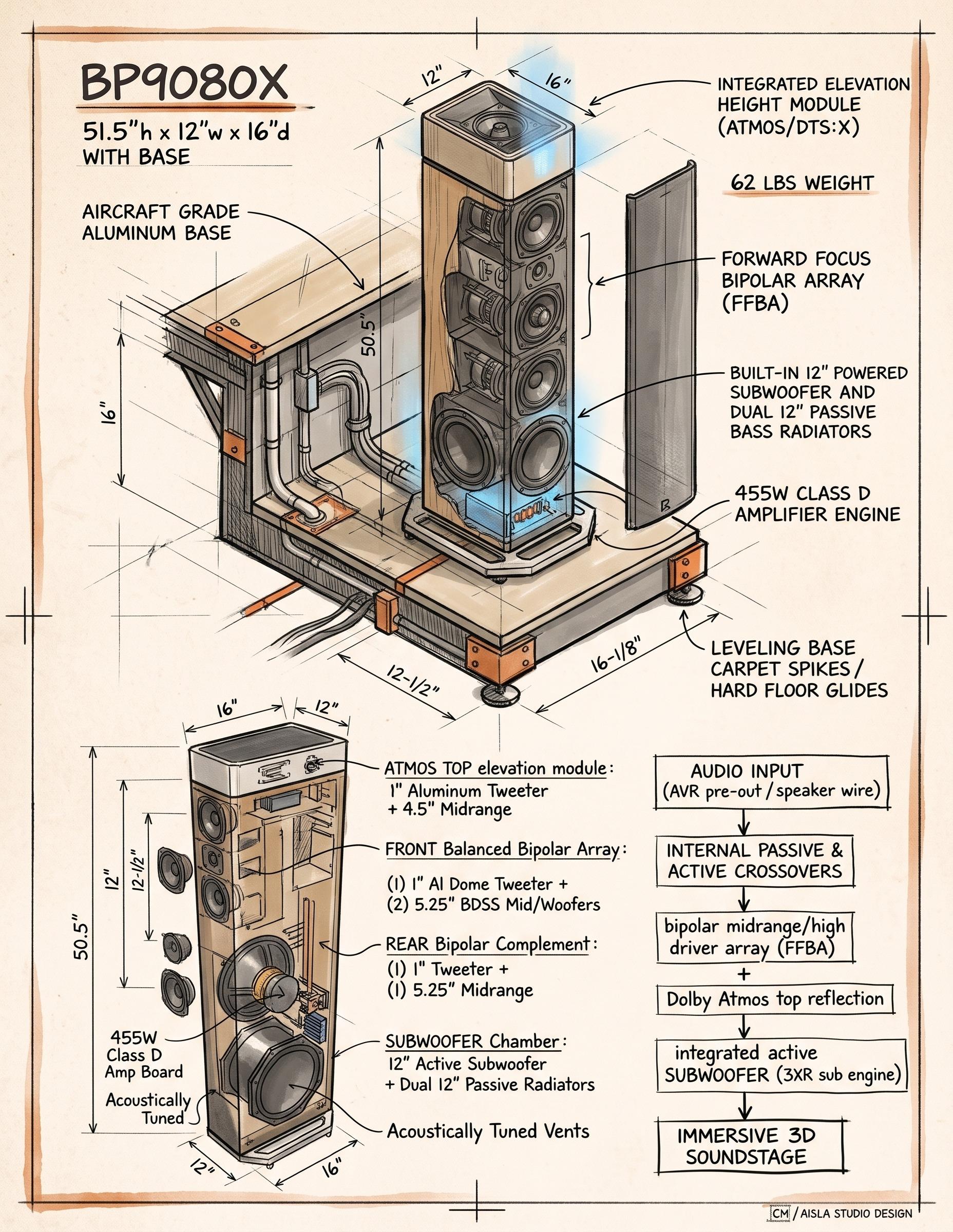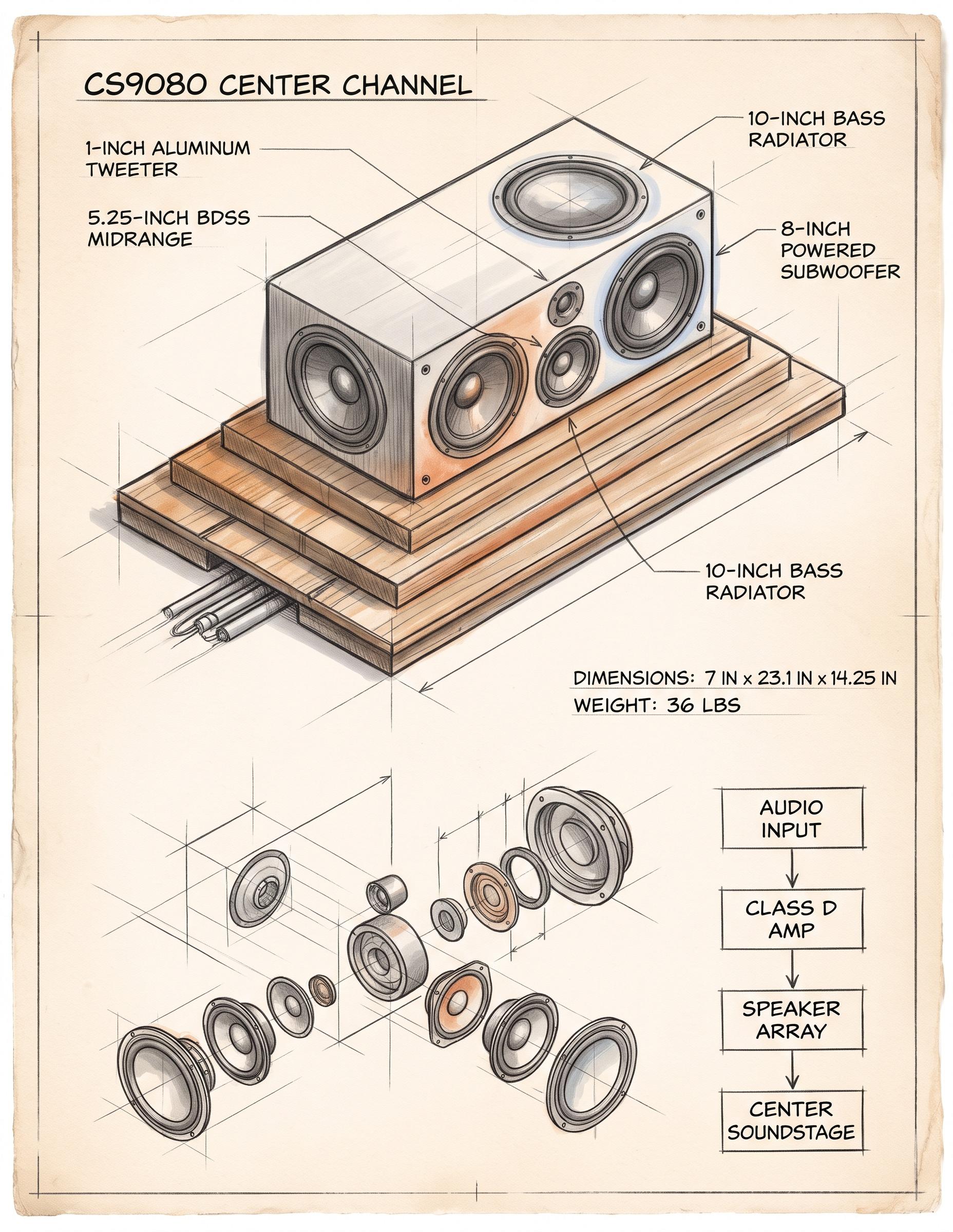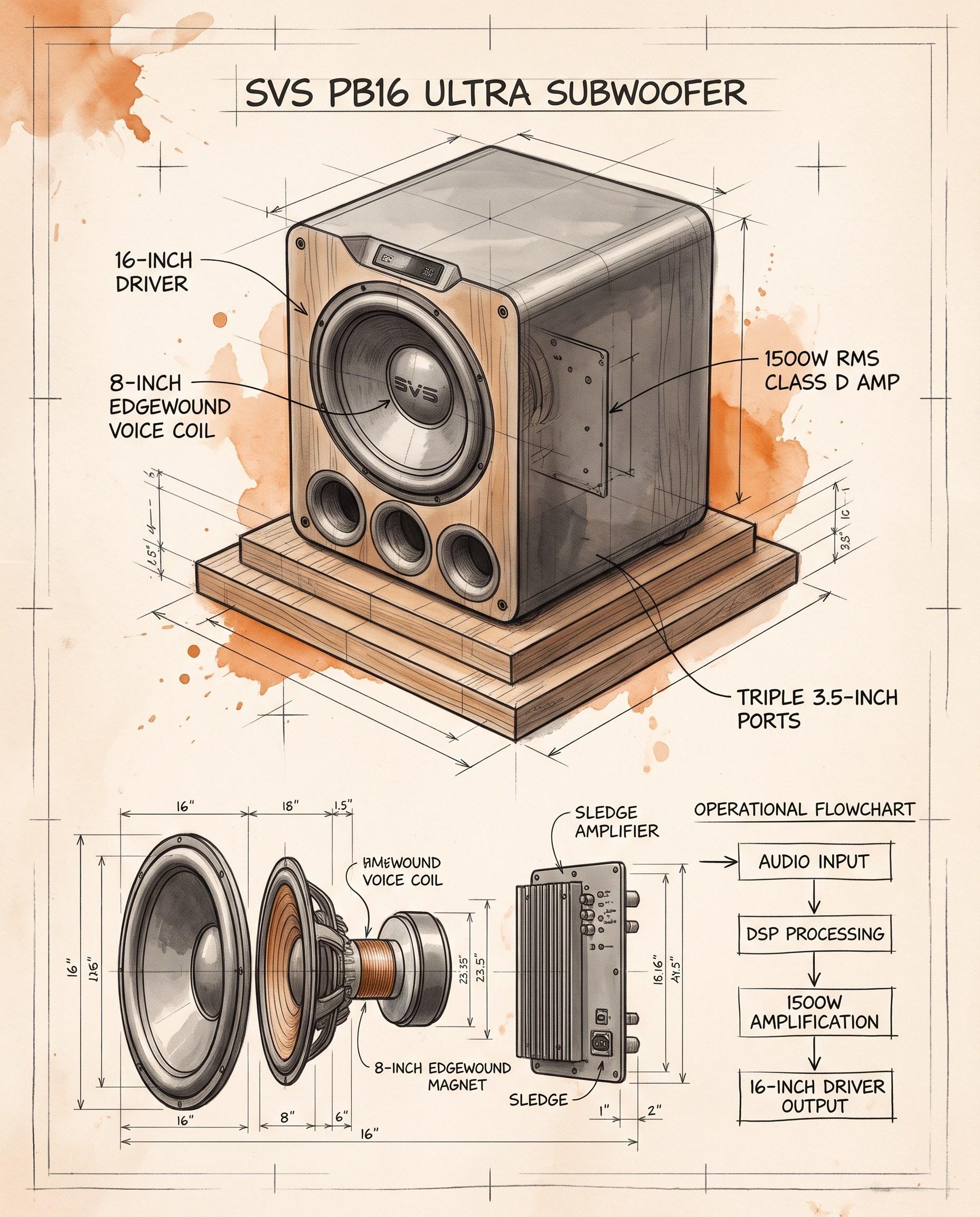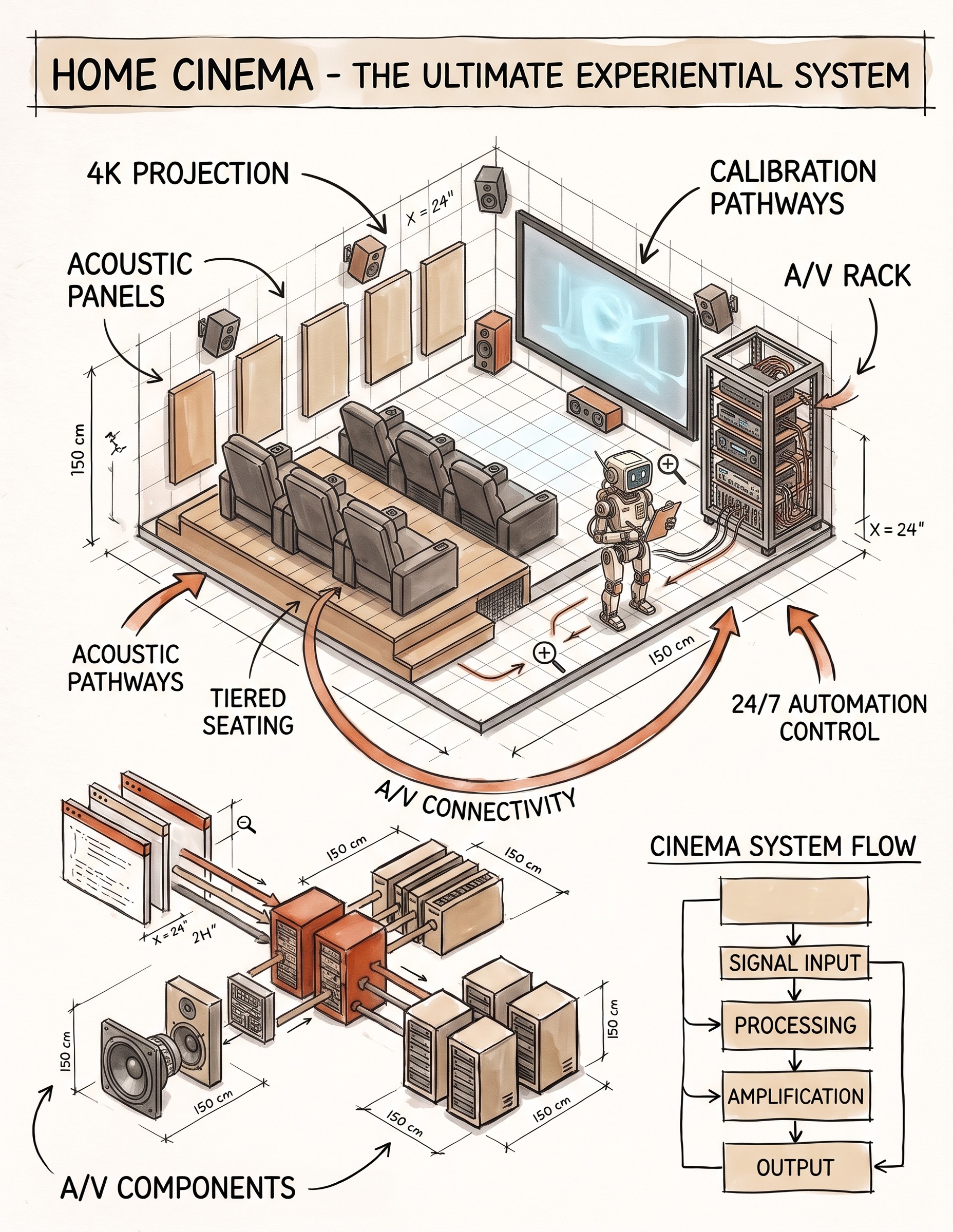
4K projection, acoustic panels, tiered seating and an A/V rack, with the signal running from input through processing and amplification to output.
Real-world facts
Designing a high-performance private cinema requires adhering to rigorous engineering standards rather than relying on guesswork. In September 2023, the Custom Electronic Design and Installation Association, known as CEDIA, published the CTA/CEDIA-RP22 standard[1]. This 154-page framework defines engineering practices for immersive audio, covering everything from dynamic sound pressure levels to speaker coverage angles[1]. Former chief scientist at Dolby, Poppy Crum, noted that "standards ensure consistency of experience" across modern cinema installations[1]. Under RP22 guidelines, home rooms are classified across four progressive performance grades, spanning baseline installations up to reference commercial dubbing stages[1].
High-resolution visual fidelity in modern residential rooms relies heavily on 4K projection technology. The commercial transition to ultra-high definition began in earnest when Sony introduced the VPL-VW1000ES native 4K projector in 2012 for CA$25,000. Current cinema systems frequently utilize Texas Instruments digital micromirror devices, or DMD chips, paired with solid-state laser phosphor light engines. These micro-mirror arrays employ rapid optical pixel shifting to project 8.3 million distinct pixels onto the fabric, creating sharp image definition without visible screen-door grid lines. Matching that pixel density to an appropriate projection surface ensures that fine textures and film grain render naturally across a wide viewing arc.
Room acoustics dictate real-world audio fidelity far more than individual electronics. Sound & Vision explains that "the goal for a good-sounding room is to achieve a fairly flat in-room frequency response"[2]. Untreated drywall surfaces reflect acoustic energy, generating harsh flutter echoes in the high frequencies and destructive standing waves below 300 Hz[2]. Installing one-inch compressed fibreglass acoustic panels attenuates specular reflections down to approximately 1,000 Hz, while two-inch panels absorb frequencies down to 500 Hz[2]. Diffuser panels along the rear wall scatter remaining energy in multiple directions to prevent acoustic deadness and preserve a natural reverberation time between 0.2 and 0.4 seconds[2]. Technicians locate critical early reflection boundaries by sliding a handheld mirror along side walls while observing the speaker reflection from the primary seat[2].
Seating placement and sightline engineering determine whether viewers remain comfortable throughout long feature films. The Society of Motion Picture and Television Engineers, or SMPTE, specifies a 30-degree horizontal viewing angle for standard commercial presentations[3]. For a truly engaging home cinema, THX recommends expanding that horizontal field of view to between 36 and 40 degrees[3]. To prevent acute neck strain during multi-hour screenings, CEDIA standards mandate that the vertical viewing angle should never exceed 15 degrees above eye level[3]. Multi-row layouts demand structural seating platforms, known as risers, engineered between 12 and 14 inches in height to clear sightlines over the heads of front passengers. These framed riser platforms are frequently packed with dense mineral wool insulation, transforming the physical furniture support into a massive, functional low-frequency bass absorber.
Centralized equipment racks house the sensitive processing, source and amplification hardware outside the main viewing environment. The 19-inch rack framework established by Middle Atlantic provides the industry foundation for mounting professional gear. Sound & Vision points out that "proper ventilation is critical for rack longevity". High-current power amplifiers and multichannel processors generate substantial heat loads that routinely exceed 1,000 watts of thermal dissipation during heavy playback, requiring thermostatically controlled intake and exhaust fans. Professional technicians physically segregate alternating current electrical lines from low-voltage line-level audio cables, running them along opposite vertical rails to eliminate electromagnetic 60 Hz hum.
Acoustic calibration pathways translate hardware capability into accurate room frequency and impulse response. Advanced room correction suites like Dirac Live evaluate digital test chirps gathered across multiple microphone positions[4]. Using an omnidirectional USB measurement microphone, such as the miniDSP UMIK-1, calibration software calculates mixed-phase filters that rectify room anomalies without causing time-domain ringing[4]. Audioholics states that Dirac Live is "an amazing tool" for optimizing vocal clarity and spatial envelopment[4]. Technicians apply targeted target curves, typically boosting frequencies below 80 Hz by 4 to 6 decibels to match human auditory sensitivity curves.
The 24/7 automation systems integrate lighting, motorized screen masking and component power cycles into cohesive presets. Automation platforms such as Control4, Crestron or Home Assistant communicate across IP networks, serial RS-232 connections and low-voltage 12V triggers. Turning on a reference cinema requires timed sequencing: source devices power on first, the cinema processor initializes next and high-current power amplifiers engage last. This staged startup prevents dangerous electrical mains surges and eliminates destructive popping transients across loudspeaker voice coils. One-touch macro commands lower ambient architectural lighting, adjust motorized climate control and activate the projection beam simultaneously.
The physical signal flow forms an uncompromised chain from source media to physical output. It begins with high-bitrate digital input from sources like a dedicated 4K UHD Blu-ray player or an Apple TV 4K streaming device. That digital bitstream travels over high-speed HDMI cables to the processor, which strips the video signal for the projector and unpacks multi-channel audio codecs. From there, digital-to-analogue converters transform the data into balanced line-level signals, which feed high-current power amplifiers. Those amplifiers deliver raw electrical wattage across heavy-gauge copper speaker wire to drive physical speaker cones and pressurize the room.
Specifications on the drawing
- 4K projection: A display system outputting an image resolution of 3840 by 2160 pixels, offering four times the visual detail of 1080p high definition. This high pixel density ensures viewers seated close to a massive projection fabric see razor-sharp edges and smooth organic textures rather than visible pixel structures.
- Acoustic panels and acoustic pathways: Engineered wall treatments and open room corridors designed to absorb harsh early sound reflections and scatter late reverberant energy. These specialized fibreglass and timber panels eliminate flutter echoes and speech smearing, allowing complex dialogue and multichannel audio cues to remain articulate.
- Tiered seating: Stepped floor platforms elevating successive rows of theatre recliners above the occupants seated directly ahead. This tiering guarantees completely unobstructed sightlines over front headrests while keeping every listener positioned inside the direct radiation coverage of surrounding loudspeakers.
- A/V rack: A standardized structural steel cabinet built to house media source units, digital surround processors, multi-channel power amplifiers and power conditioners in one organized enclosure. It provides secure structural mounting, clean cable isolation and directed thermal airflow to keep sensitive electronics within safe operating temperatures.
- Calibration pathways: The dedicated measurement routes used by calibrated measurement microphones and digital signal processing software to evaluate room acoustic response. This testing maps room boundary modes and phase anomalies so equalization filters can smooth out peaks and dips across all listening seats.
- 24/7 automation control: An integrated smart processing controller that runs continuously to monitor, manage and coordinate media hardware, room lighting and environmental systems. It automates power relays, HDMI switching and atmospheric lighting scenes through simple commands, eliminating the confusion of managing multiple separate remotes.
- Signal flow: input, processing, amplification, output: The linear transmission path followed by audio and video data, starting from source players, passing through digital processors, feeding high-current amplifiers and driving physical speakers or screens. Maintaining clean physical separation and balanced electrical wiring along this pathway prevents electromagnetic noise and preserves sonic dynamic range.
Sources
- Cinemaworks, RP22 - immersive audio for home cinema
- Sound & Vision, Room Acoustics
- Modenese Bespoke, Home Cinema Seating Layout & Sight-Line Guide
- Audioholics, More Dirac Questions